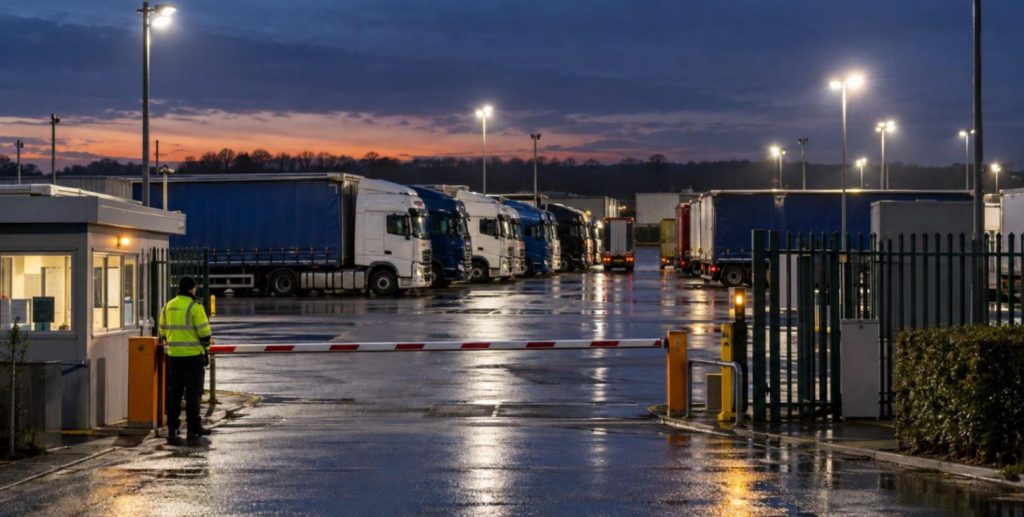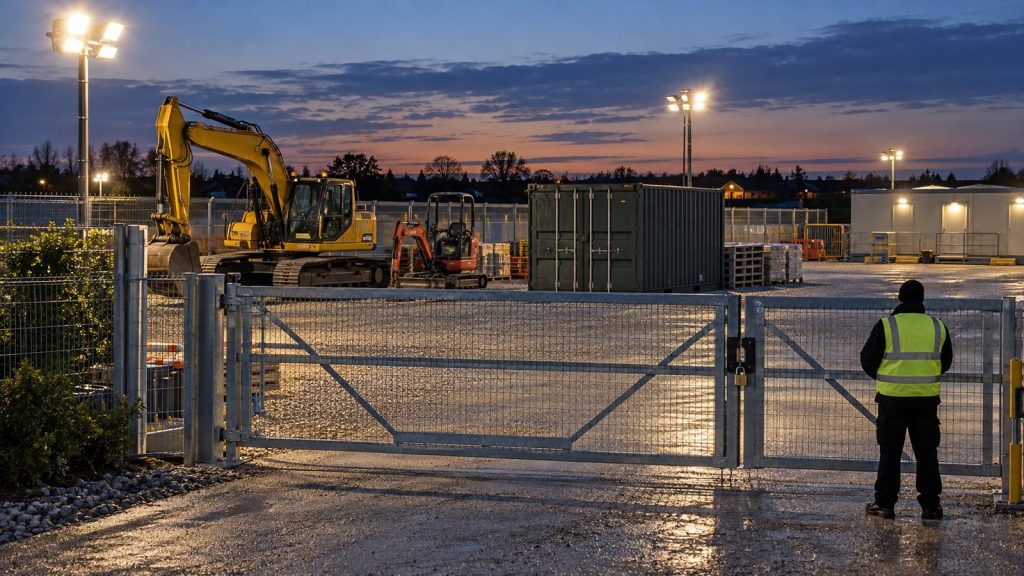
Industrial sites (factories, manufacturing plants, processing facilities, chemical and energy infrastructure) present a security problem that ordinary commercial guarding does not prepare you for. The assets are heavy, the perimeters are long, the hazards are real, and an incident can halt production at a cost that dwarfs the value of whatever was stolen.
This guide covers what industrial security involves, how it differs from standard commercial guarding, and what to specify when procuring it.

Why industrial sites are different
Production downtime dominates the cost
On most industrial sites the direct loss from theft is modest next to the cost of stopping the line. Copper stripped from a substation is worth little as scrap; the outage it causes is not. Security specifications should be written around continuity, not replacement cost.
The perimeter is long and often rural
Industrial estates and plants frequently sit on large plots with extended boundaries, multiple gates and poor natural surveillance. Covering that ground needs patrol strategy, not a single gatehouse.
Officers work inside a hazardous environment
An officer patrolling a manufacturing floor is operating around moving plant, hot works, confined spaces and hazardous substances. They need site-specific inductions and appropriate PPE, and the provider needs demonstrable health and safety management, which is what accreditations such as CHAS and SafeContractor actually evidence.
Metal theft remains a persistent risk
Cable, copper, catalytic converters and scrap remain targets, particularly on sites with external storage or accessible plant.
Contractor traffic is constant
Maintenance shutdowns bring large numbers of unfamiliar contractors on site over a short window. Access control during shutdown periods is a distinct problem from routine access control.
What industrial security cover involves
Static guarding and gatehouse control
Controlling entry is the foundation: verifying identity, logging vehicles, ensuring inductions are complete, and preventing unauthorised access to production areas. Static guarding to BS 7499 sets the standard for how this should be staffed and supervised.
Perimeter and internal patrols
Scheduled and irregular patrols across boundaries, external storage, plant rooms and substations. Patrol routes should be logged electronically so completion is verifiable rather than asserted.
Fire marshal and emergency response cover
Industrial sites carry elevated fire loading. Trained fire marshals matter most during shutdowns, hot works and night shifts, when normal supervisory cover is reduced.
Security dog units
For large perimeters and external yards, NASDU-qualified handler teams cover ground that would need several officers on foot.
Shutdown and turnaround support
Planned maintenance periods need surge cover: additional gate staff, contractor verification, and tighter control of tool and equipment movement.
Vetting to BS 7858
Personnel screening to BS 7858 is the relevant standard for security staff placed in sensitive environments.
Specifying an industrial security contract
A weak specification produces a weak service. At minimum, define:
- Scope and hours. Which areas, which shifts, and what happens on bank holidays and during shutdowns.
- Assignment instructions. Written, site-specific, and reviewed, not a generic template with your name at the top.
- Patrol frequency and logging. How routes are recorded and how you access the records.
- Escalation. Who the officer calls, in what order, for which categories of incident.
- Health and safety integration. Induction requirements, PPE, permit-to-work awareness.
- KPIs and reporting. Incident reporting timescales, patrol completion rates, and a review cadence.
- Continuity. Named relief officers who know the site, rather than unfamiliar cover at short notice.
Questions worth asking any industrial security provider
- Are all officers SIA-licensed, and how is licence expiry monitored?
- Do you hold BS 7499 certification for static guarding and screen to BS 7858?
- What accreditations do you hold: CHAS, SafeContractor, ISO 9001?
- What experience do your officers have in manufacturing or process environments specifically?
- How is night cover supervised?
- Can you scale for shutdown periods, and with what notice?
- What are your public and employers’ liability limits?
Frequently asked questions
What is industrial security?
Industrial security is the protection of manufacturing, processing and infrastructure sites, covering access control, perimeter patrols, asset protection and fire safety cover, delivered by officers trained for hazardous operational environments.
How does industrial security differ from commercial security?
Industrial sites have longer perimeters, higher hazard levels, greater downtime costs and heavier contractor traffic. Officers need site-specific safety training that standard commercial guarding does not require.
Do factory security guards need specific training?
Beyond the mandatory SIA licence, officers should complete site inductions covering plant hazards, emergency procedures, permit-to-work systems and PPE requirements.
Can security cover be increased during a shutdown?
Yes, and it usually should be. Maintenance turnarounds bring unfamiliar contractors on site in volume and warrant additional gate and access control staff.
What accreditations should an industrial security provider hold?
Look for SIA licensing as a baseline, plus BS 7499 for static guarding, BS 7858 for screening, and CHAS, SafeContractor or ISO 9001 for audited safety and quality management.
Industrial security from First Class Services Group
First Class Services Group provides SIA-licensed industrial security across the UK. See the areas we cover. We hold CHAS accreditation, ISO 9001 certification and BS 7499 certification for static site guarding.
Related services include security guards, gate security, fire marshals and security dog units. See also our warehouse security and office building security services.
Request a site survey and quote, or call 020 7183 5811.