An HGV yard holds some of the most valuable things a transport business owns: tractor units, loaded trailers, fuel and the goods your customers trust you with. Thieves know this. This guide explains how HGV yard security works in practice, from the fence line to the night shift, so you can find the gaps on your own site and fix them in the right order.
Why HGV yard security matters in 2026
Freight crime is a large and organised problem in the UK. The National Vehicle Crime Intelligence Service (NaVCIS) recorded 3,424 freight crime incidents in 2025, about nine a day, with an estimated cost price loss of £65.1 million. NaVCIS believes the true cost is several times higher once hidden costs such as damaged vehicles, delays and lost contracts are counted.
Two findings matter most for yard owners:
- 54% of incidents happened at independent parking locations such as industrial estates and laybys, not at motorway services.
- Trailer hook-up thefts are rising. Criminals use cloned tractor units to drive into yards and leave with loaded trailers that look like a normal collection.
In other words, the risk is not only on the road. A quiet yard on an industrial estate, with trailers parked overnight and no one checking who drives in, is exactly what organised groups look for.
What thieves target in an HGV yard
Before you spend money, be clear about what you are protecting. The common targets are:
| Target | How it is usually stolen | Main defence |
|---|---|---|
| Loaded trailers | Hook-up theft with a cloned or stolen tractor unit | Gate checks, collection paperwork, king pin locks |
| Goods inside trailers | Curtain slashing, the most common method in 2025 | Park high-risk loads in the most visible area, patrols, hard-sided trailers for valuable goods |
| Diesel | Fuel caps forced or drilled at night | Locking fuel caps, anti-siphon devices, lighting, patrols |
| Tractor units | Keys taken from the office or cab | Key control, immobilisers, trackers |
| Batteries, catalytic parts, tools | Quick strip-out from parked vehicles | Perimeter, lighting and someone on site |
How to secure an HGV yard: 10 practical steps
Good yard security works in layers. Each layer slows a thief down or makes them more likely to be seen. No single measure is enough on its own.
1. Start with a simple risk check
Walk the site at night, not just in the day. Note where vehicles are parked, which areas are dark, where the fence is weak and how someone could drive in or out. Ask your drivers and yard staff where they would get in if they were a thief. They usually know.
2. Make the perimeter hard to cross
A strong fence is the first line of defence. Look for gaps, damaged panels, overgrown edges and anything stacked against the fence that could be used to climb it. Concrete blocks or bollards along open edges stop vehicles from being driven through a fence line.
3. Control the gate
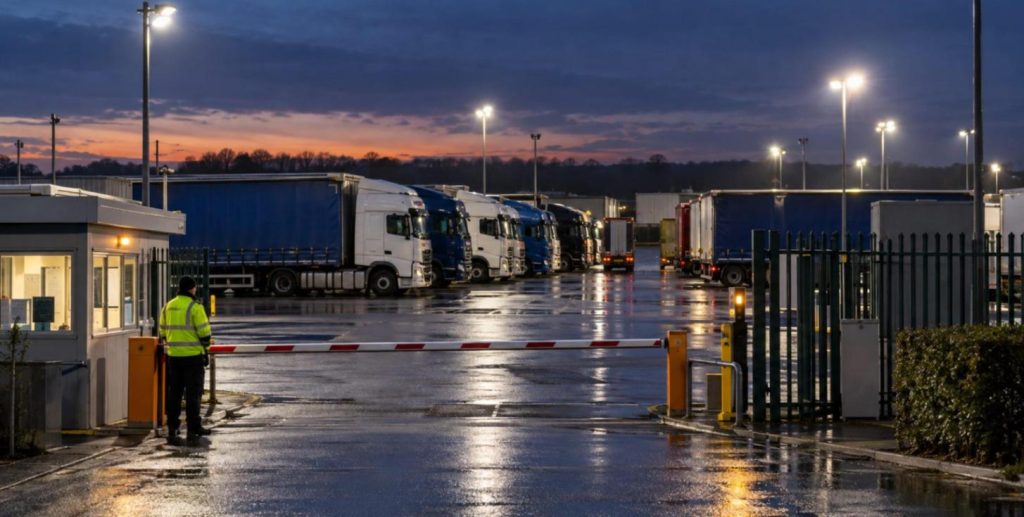
Most yards have one main weakness: the gate. Keep the number of entrances as low as possible and close any you do not need. At the gate, every vehicle in and out should be checked and logged, with registration, trailer number, driver name and time. This is the single best defence against hook-up theft, because a cloned tractor unit only works if nobody checks the collection against the booking.
4. Check every collection
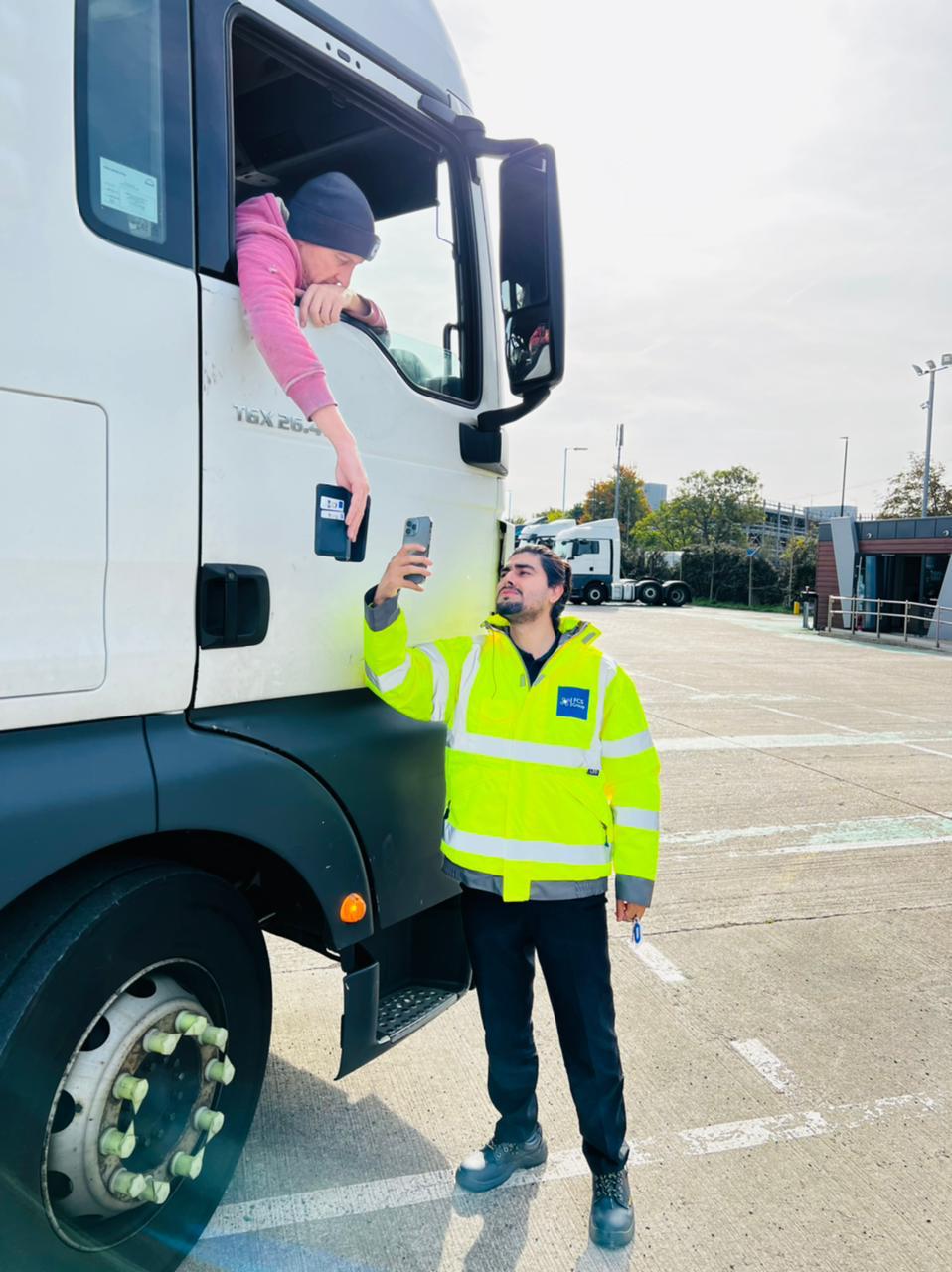
Set a clear rule: no trailer leaves without a booking that matches the driver, the vehicle and the paperwork. If something does not match, the gate officer stops the collection and calls the transport office. Criminals also use load fraud, where they intercept emails and redirect a collection, so confirm any late changes by phone using a number you already hold, not one in the email.
5. Light the yard properly
Dark corners are where curtain slashing and fuel theft happen. Light the gate, the fuel area, the trailer park and the fence line. Check the lights work every week and replace failed lamps quickly.
6. Use CCTV that someone actually watches
Cameras help, but only if they cover the right areas, record clearly at night and someone acts on what they show. A camera that is reviewed the next morning tells you what was stolen. An officer on site who sees the same image at 2am can stop it.
7. Lock the trailers and the fuel
King pin locks stop a parked trailer from being coupled to another unit. Locking fuel caps and anti-siphon devices slow down diesel theft. Park high-value loads where they are easiest to see, and back trailers up against walls or each other so the doors cannot be opened.
8. Control the keys
Keys left in cabs or on an office hook make theft easy. Keep keys in a locked cabinet with a signing-out log, and never leave them in a vehicle overnight.
9. Put people on site at the riskiest times
Technology records crime. People prevent it. Security guards can run the gate, check collections, patrol the yard on foot and respond the moment something looks wrong. Many yards only need cover at night, at weekends and over bank holidays, when the site is empty and trailers are full. If you hire a contractor, they must use SIA licensed officers, and you can check a security company’s SIA licences before you sign.
10. Report everything
Report every theft and attempt to the police, even small ones. Freight crime has no dedicated Home Office crime code, so national data depends on businesses and forces reporting incidents. Good reports help police link attacks to the same groups.
HGV yard security checklist
Use this quick checklist for a monthly review:
- Fence line walked, no gaps, nothing stacked against it
- Unused entrances closed and locked
- Every vehicle in and out logged at the gate
- Every collection matched to a booking, driver and vehicle
- Late collection changes confirmed by phone
- All yard lights working
- Cameras cover the gate, fuel area and trailer park, and recordings are clear at night
- King pin locks on parked trailers
- Locking fuel caps on all units
- Keys locked away and signed out
- Security cover planned for nights, weekends and bank holidays
- All incidents reported to the police
Security guards or secure HGV parking?
If you run your own depot, the usual answer is to strengthen the site and add guards at the times of highest risk. If your vehicles park away from your depot, or your yard is full, secure HGV parking can be the better option. Secure parking moves the risk to a site that is already fenced, lit, gated and staffed.
| Option | Best for | Things to check |
|---|---|---|
| Security guards at your own yard | Depots with regular overnight and weekend parking | SIA licences, gate procedures, patrol and reporting routine |
| Secure HGV parking | Vehicles away from base, overflow parking, short-term needs | Fencing, lighting, CCTV, gate control and staff on site |
| Both | Larger fleets and high-value loads | One provider for both makes cover simpler |
For a guide to what officers cost per hour and per shift, see our UK security guard cost guide. To understand what a static officer does on a typical shift, read what a static security guard does.
HGV parking and yard security from FCS Group
FCS Group has provided security services across the UK and Ireland since 2016. We offer HGV parking and yard security for hauliers, logistics firms and construction companies. Our own parking yards have CCTV and on-site staff, and we can place officers at your yard to run the gate, log vehicles, check collections and patrol overnight. All our security guards are fully SIA licensed and trained.
Running a construction or plant yard instead? Our guide to construction plant and tool theft covers the risks on building sites.
Get a free quote or call 020 7183 5811 to talk about your yard.
Frequently asked questions
What is the best way to stop trailer theft from a yard?
Combine king pin locks on parked trailers with strict gate control. Every collection should be checked against a booking, the driver and the vehicle before the trailer leaves. This stops hook-up theft with cloned tractor units, which NaVCIS says is rising.
How do I stop diesel theft from lorries?
Fit locking fuel caps and anti-siphon devices, light the parking area, and park units with fuel tanks facing a wall or each other where possible. A guard patrolling at night is the strongest deterrent, because fuel theft takes time and thieves avoid being seen.
Do HGV yard security guards need an SIA licence?
Yes. Officers supplied under contract to guard premises, vehicles or goods need an SIA security guarding licence. Ask any provider for licence details and check them on the GOV.UK register.
When is an HGV yard most at risk?
Nights, weekends and bank holidays, when trailers are loaded and the site is quiet. Risk also rises before Christmas, when thieves target electrical goods, toys, games consoles and alcohol.
Is CCTV enough to secure an HGV yard?
Usually not. CCTV helps you see and record what happens, but it does not stop a theft on its own. It works best with good lighting, a strong perimeter, gate control and people on site who can respond.