
Short answer: A solar farm is most at risk of theft while it is being built, because cable reels, panel piles and tools sit in open fields before permanent fencing, lighting and power are in place. The best protection is a layered plan made before groundbreaking: a secure boundary, controlled gates and deliveries, secured storage for the most valuable items, and trained, SIA-licensed security officers on site when nobody else is.
This guide covers what thieves target, why installation is the riskiest phase and what a site manager can put in place from day one.
Why solar sites are targeted during construction
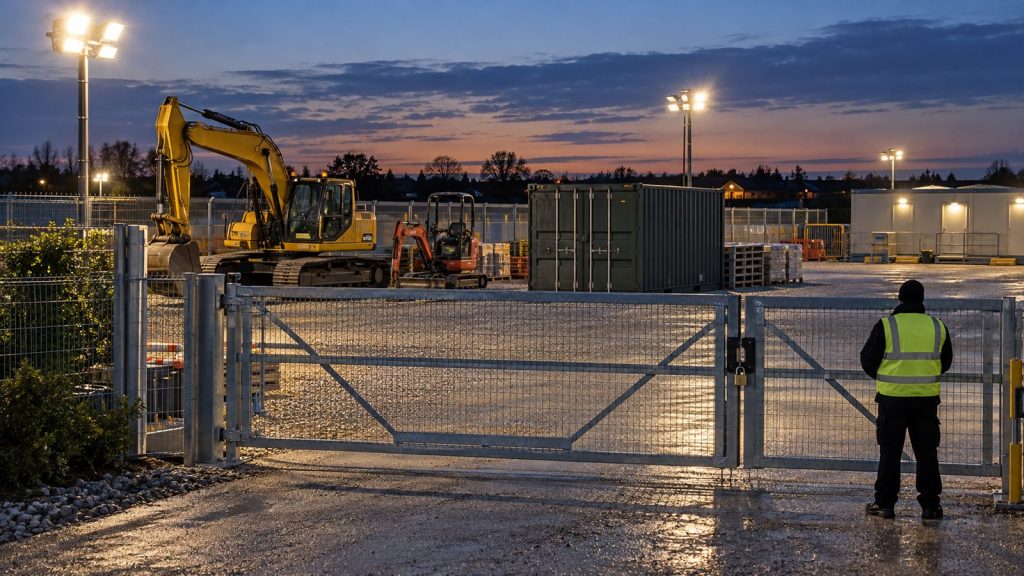
Solar farms are usually large, rural and quiet at night. During construction they hold a lot of valuable, easy-to-sell material and little of the permanent protection the finished site will have.
Police have said as much on UK schemes. In a planning response for a proposed solar farm in West Yorkshire, police warned that criminals may target copper cabling and cable reels while the site is under construction. They also pointed out that fences can be cut, gates climbed and equipment bases vandalised, so a single measure is never enough.
Industry reporting backs this up. PV Tech has reported that contractors are very much at risk during construction because of exposed cable reels and panel piles, and that thieves also cut and strip inverters. It cited a fourfold rise in recorded solar thefts between 2021 and 2022, and a 5MW site that lost about three quarters of its panels. These are older figures, but they show how serious a single incident can be.
What thieves go for
- Copper cable and connectors, which are quick to steal and easy to sell as scrap
- Solar panels stored in piles before installation
- Inverters and electrical equipment, which can be stripped for metal
- Plant, tools and fuel left on site overnight
Why installation is the riskiest phase
- The perimeter is not finished. Temporary fencing or none at all, and long boundaries that are hard to watch.
- No permanent power. Lighting and electronic protection are harder to run.
- Valuable stock is spread out. Deliveries arrive in stages and materials sit in laydown areas for weeks.
- Many people come and go. Contractors, drivers and visitors make it harder to tell who should be there.
- The site is remote. Response times are longer and nobody passes by at night.
A layered security plan for installation
- Assess the risk before groundbreaking. Check local crime, access routes and where the valuable materials will sit. Tell your local police about the site and its value.
- Secure the boundary and gates. Use one controlled entrance, and keep other gates locked. Remember that fences can be cut, so do not rely on them alone.
- Control deliveries. Log every vehicle and driver in and out, and agree delivery times with your suppliers.
- Protect cable and panels. Keep cable reels and panels in a lit, lockable or closely watched laydown area, and count stock regularly. Marking equipment makes stolen items easier to trace.
- Light the key areas. Focus on the gate, the laydown area and the site office.
- Put trained people on site. A security officer at the gate or laydown area deters opportunists, checks who comes and goes and records what happened.
- Keep records. A daily log of visitors, deliveries and incidents helps with insurance claims and police reports.
Our construction site security checklist covers the daily and weekly checks that apply to any build, including solar.
What security officers do on a solar construction site
- Control the entrance and check contractors and drivers against an approved list
- Log deliveries and collections
- Watch the laydown area and report anything missing or out of place
- Be a visible deterrent at the times the site is empty, such as nights and weekends
- Write up every incident so the site manager has a clear record
Because solar sites are often in remote places, cover plans should be agreed with the site manager in advance, including shift times and who to call if something happens.
On any build, plant and tools are also targets. See our guide to construction plant and tool theft.
Choosing a security supplier
Ask for the licence number of every officer and check each one yourself on the free SIA register. Our guide explains how to check a security company’s SIA licences. Ask how the supplier covers sickness and holidays, and what you will receive after each shift. For typical hourly rates, see our security guard cost guide.
Security guards from FCS Group
FCS Group supplies construction site security and security guards across the UK and Ireland. All our security guards are fully SIA licensed and trained. If you are planning a solar installation, get a free quote and tell us the site location, layout and build programme.
Why are solar farms targeted by thieves?
They are large, rural and unattended at night, and they hold valuable material such as copper cable, panels and inverters. During construction the permanent fencing, lighting and power are often not yet in place.
When is a solar farm most vulnerable to theft?
During construction, when cable reels and panel piles are stored in open laydown areas and the perimeter is still temporary.
What do thieves steal from solar sites?
Mainly copper cable and connectors, solar panels, inverters and electrical equipment, as well as plant, tools and fuel.
Do I need security guards on a solar farm construction site?
It depends on the size, location and value of the materials on site. Many sites use trained officers at the gate and laydown area, especially at night and weekends, alongside secure storage and good records.
Do security guards on a construction site need an SIA licence?
Security guards doing licensable work need the right SIA licence. Always ask for each officer’s licence number and check it on the SIA register.
How can I protect cable and panels before installation?
Store them in a lit, controlled laydown area, log deliveries, count stock regularly and mark equipment so it can be traced.
Summary
Solar farms are most exposed during installation. Plan security before groundbreaking, control the entrance and deliveries, protect cable and panels, and use SIA-licensed officers when the site is empty. Get a free quote from FCS Group to cover your build.
Sources: Yorkshire Evening Post: police warning on a proposed Wakefield solar farm; PV Tech: crime and security for solar PV sites; GOV.UK: check security staff have a licence to work.