
Short answer: A concierge security officer is a front-of-house role that mixes customer service with security. They greet visitors, manage the front desk, sign people in and out, handle deliveries and control who enters the building. A security guard is focused on protecting the site: patrolling, watching entrances and exits, checking doors and responding to incidents. Many buildings need both skills, and in the UK a contracted officer who guards against unauthorised access needs an SIA licence, whatever their job title.
This guide compares the two roles side by side, explains when each one fits, what the SIA licence rules say and how to choose the right mix for an office block, residential building or mixed-use site.
What is concierge security?
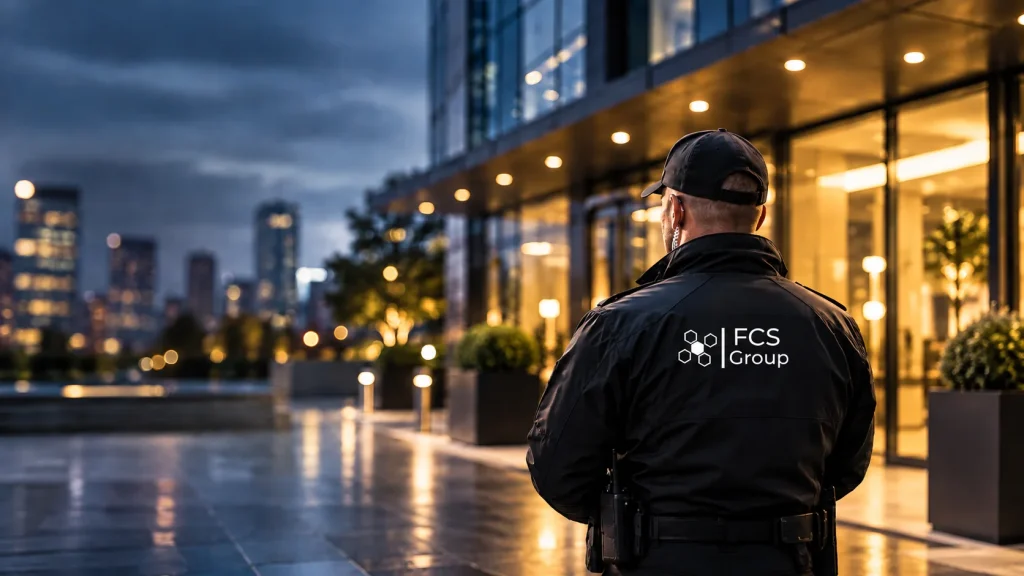
Concierge security, sometimes called a security concierge or front-of-house security, places a trained officer at the main entrance or reception of a building. Their first job is to make people feel welcome and help them, but they also act as the building’s first line of security. Typical duties include:
- greeting residents, staff and visitors at the front desk
- signing visitors in and out and issuing passes
- checking that people are allowed into the building or a particular floor
- receiving deliveries, post and parcels and letting residents or tenants know
- booking in contractors and making sure they follow building rules
- answering questions and dealing with requests and complaints
- reporting faults, hazards and anything suspicious
- helping with evacuations when the fire alarm sounds
Concierge security is common in residential blocks, corporate offices, business centres, hotels and mixed-use developments, where the front desk is the first thing people see.
What does a security guard do?
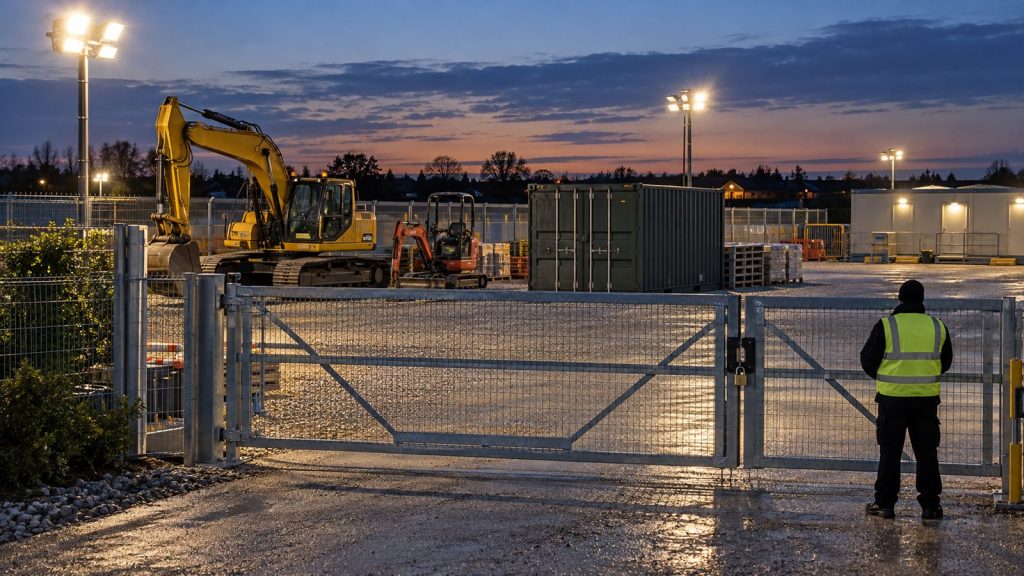
A security guard, often called a static guard or security officer, is there mainly to protect the site, its people and its property. Duties depend on the site, but usually include:
- controlling access at gates, doors and loading bays
- patrolling the building, car park and perimeter on foot
- checking doors, windows and fire exits are secure
- watching for and dealing with incidents and intruders on site
- locking up and unlocking at the start and end of the day
- keeping incident reports and daily activity logs
- acting as a visible deterrent to theft and damage
Our guide to what a static security guard does covers these duties in more detail.
Concierge security vs security guard: the key differences
| Concierge security | Security guard | |
|---|---|---|
| Main focus | Front-of-house service with security | Protecting the site, people and property |
| Where they work | Reception, lobby or front desk | Gates, entrances, patrol routes and the whole site |
| Typical sites | Residential blocks, offices, hotels, business centres | Construction sites, warehouses, factories, empty buildings, offices |
| Day-to-day tasks | Visitors, passes, deliveries, contractors, enquiries | Patrols, access control, lock-up, incident response |
| Skills | Customer service, communication, admin, security awareness | Observation, patrolling, conflict management, reporting |
| Dress | Smart corporate uniform or suit | Security uniform, often with hi-vis on outdoor sites |
| Hours | Often business hours or 24/7 front desk cover | Often nights, weekends and 24/7 cover |
| SIA licence | Needed if contracted and guarding against unauthorised access | Needed if contracted (security guard licence) |
Do concierge staff need an SIA licence?
It depends on the duties and who employs them. Under the Private Security Industry Act 2001, a security guard licence is needed to guard premises or property against damage, theft, unauthorised access or disorderly behaviour when the work is done under a contract for services, for example when a security company supplies the officer to your building.
That means:
- Contracted concierge security officers who control access, refuse entry or protect the building need an SIA security guard licence.
- In-house concierge or reception staff employed directly by the building owner or managing agent do not usually need a licence for this work.
- Pure customer service tasks such as answering questions, taking deliveries or helping evacuate the building in a fire alarm are not licensable in themselves.
GOV.UK guidance gives a useful example: checking whether someone is allowed in is fine without a licence, but refusing them entry or making them leave is licensable work. Since most concierge security roles include controlling who comes in, contracted officers should hold a licence. All our security guards are fully SIA licensed and trained.
When to choose concierge security
Concierge security is usually the better fit when:
- the building has a staffed reception or lobby that visitors and residents use every day
- first impressions matter, for example a corporate headquarters, a hotel or a premium residential block
- there are lots of deliveries, contractors and visitors to manage
- residents or tenants expect help with day-to-day requests, not just security
- the main risk is people getting in who should not, rather than theft from an empty site
When to choose a security guard
A security guard is usually the better fit when:
- the site is empty, under construction or closed outside working hours
- you need regular patrols of a large site, car park or perimeter
- you hold high-value stock, plant or materials
- the main risk is theft, damage, trespass or anti-social behaviour
- there is no reception desk, or the main access is a gate or loading bay
Do you need both?
Many buildings use both. A common set-up is a concierge security officer on the front desk during the day, with a security guard covering nights and weekends, patrolling the building and handling lock-up. Larger sites may have concierge staff at reception and a separate officer on the car park or loading bay at the same time. The right mix depends on how the building is used, the hours you need cover and what your risk assessment shows.
How much does each cost?
Concierge security and security guard rates depend on the hours, the location, the contract length and the skills you need. Officers with strong customer service and admin skills for premium front-of-house roles can cost more than a standard static guard. Our security guard cost guide explains typical UK hourly rates and what affects the price.
Concierge and building security from FCS Group
FCS Group supplies reception, concierge and building security officers for offices, business parks, residential and commercial buildings across the UK and Ireland. We can provide a front desk officer, static security guards for nights and weekends, or a combination of both, planned around your building and your hours.
Frequently asked questions
What is the difference between concierge security and a security guard?
Concierge security combines front-of-house customer service with security at a reception or lobby. A security guard focuses on protecting the site through access control, patrols and incident response.
Does a concierge need an SIA licence?
A contracted concierge who controls access or guards the building needs an SIA security guard licence. In-house concierge staff employed directly by the building usually do not need one for that work.
Is a concierge the same as a receptionist?
Not quite. A receptionist mainly handles visitors, calls and admin. A concierge security officer does that too, but is also trained to control access, spot problems and respond to security incidents.
Can concierge security work 24 hours?
Yes. Many residential blocks and large offices have 24/7 front desk cover, often split into day and night shifts.
Where is concierge security used?
It is common in residential blocks, corporate offices, business centres, hotels and mixed-use developments, wherever a staffed front desk is the main entrance.
Which is better for my building?
Choose concierge security if a busy front desk and good first impressions matter most. Choose a security guard if the main risk is theft or trespass on an empty or large site. Many buildings use both.
Summary
Concierge security is a front-of-house role that blends customer service with access control. A security guard is focused on protecting the site through patrols, access control and incident response. Contracted officers in either role who guard against unauthorised access need an SIA licence. If you are not sure which your building needs, get a free quote and we will help you plan the right cover.