A fire watch is a trained person, or a small team, whose only job is to look for fire and raise the alarm in a building or on a site where the fire risk is temporarily higher than normal. In the UK you usually need one after hot works, when a fire alarm or sprinkler system is faulty or switched off, and on construction sites where the fire risk assessment or your insurer asks for it. Fire watch services supply trained officers by the shift, often at short notice, so you can cover these periods without taking your own staff off their work. This guide explains what UK rules actually say about fire watch cover, how long it has to last after hot works, what a fire watch officer does on shift, whether they need an SIA licence and what fire watch services cost per hour. Most fire watch guides online are written for the United States and quote American rules (NFPA, OSHA) that do not apply here. Everything below is based on UK law and UK guidance.
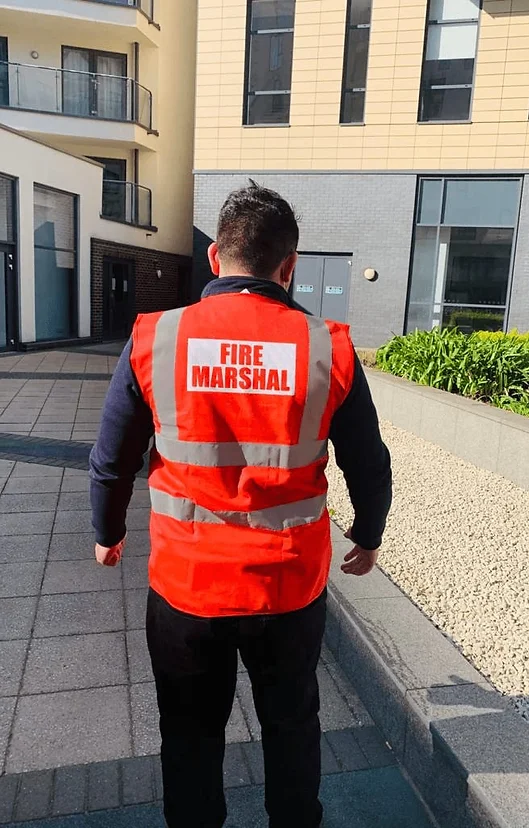
What is a fire watch?
A fire watch is a temporary fire safety measure where a competent person patrols an area to spot smoke, heat or flames early, raise the alarm, call the fire and rescue service and help people get out. It fills a gap: either something that normally protects the building is not working, or an activity such as welding has created a short-term ignition risk. There is no single UK law that uses the phrase “fire watch” and tells you exactly when to have one. The duty comes from your fire risk assessment. Under the Regulatory Reform (Fire Safety) Order 2005, the “responsible person” (usually the employer, owner or whoever controls the premises) must carry out a suitable and sufficient assessment of fire risk and put the right measures in place. When the assessment shows a gap that people or equipment cannot cover, a fire watch is often the most practical answer. In Scotland the same idea applies under the Fire (Scotland) Act 2005 and the Fire Safety (Scotland) Regulations 2006, where the person with the duty is called the “dutyholder”. In Northern Ireland it falls under the Fire and Rescue Services (Northern Ireland) Order 2006 and the Fire Safety Regulations (Northern Ireland) 2010.
When do you need a fire watch in the UK?
The most common reasons are listed below. In every case the final decision should be recorded in your fire risk assessment or your hot work permit.
1. After hot works
Hot works are any jobs that use flames, sparks or heat: welding, cutting, grinding, brazing, soldering and torch-on roofing. Sparks and hot metal can drop into voids or through gaps and smoulder unseen for a long time before a fire breaks out, often after the workers have gone home. Two UK documents set the standard:
- The Joint Code of Practice on the Protection from Fire of Construction Sites and Buildings Undergoing Renovation (tenth edition, August 2022, now including Amendment 2 of May 2025). It says the continuous fire watch should be kept for at least one hour after the hot work is finished. Further checks must then be made at intervals of no more than 20 minutes for at least another hour, and possibly up to three hours or more if the risk assessment calls for it. Checks must include areas within 10 metres on the other side of walls, partitions or ceilings, and floors below. The watch must continue through lunch and tea breaks.
- HSE guidance HSG168, Fire safety in construction (third edition, 2022). It asks for a continuous fire watch for at least an hour after hot work ends, followed by at least one more check two hours after the work ends. It also recommends finishing hot works two hours before the end of the working day, so there is time to watch the area before the site closes.
The Joint Code also says every hot work job needs its own permit covering a specific time and place. “Blanket” permits for a whole site or a whole week are not acceptable.
2. When the fire alarm or sprinklers are not working
Fire alarms fail, get damaged, or are switched off in zones while contractors work or a system is upgraded. Sprinklers are drained for repairs. When that happens, the building has lost its early warning, and the responsible person has to decide straight away how to keep people safe until it is fixed. GOV.UK guidance for people with duties under fire safety law says a failure of essential fire safety equipment needs an immediate assessment of the risk and a plan to put it right. A fire watch, sometimes combined with manual alarms such as air horns or handbells, is a common interim measure while the engineer works on the system. The Joint Code also recommends that no more than one alarm zone is disabled at any one time during planned work. For high-rise residential buildings in England (at least 18 metres tall or at least seven storeys), the Fire Safety (England) Regulations 2022 add a legal step: if a fault with the fire detection and alarm system, or other key fire-fighting equipment, cannot be fixed within 24 hours, the responsible person must report it to the local fire and rescue service as soon as practicable.
3. On construction and refurbishment sites
Buildings under construction are more exposed to fire than finished ones. Compartment walls and fire doors may not be in place yet, detection systems may be incomplete and there is plenty of packaging, timber and waste. Timber frame buildings, high-rise sites and work in occupied buildings carry the highest risk, and the Joint Code says fire watch periods should be longer in these situations. If the Joint Code forms part of your insurance contract, not following it can put your cover at risk.
4. Events, temporary structures and short-term risks
Marquees, temporary stages, exhibitions and buildings with a known temporary problem (a damaged fire door, a blocked escape route during works) may also need a fire watch while the issue exists. Some insurers ask for one after a fire or a near miss until the cause has been dealt with.
Is a fire watch a legal requirement?
Not by name. What is a legal requirement is managing fire risk properly. The responsible person must assess the risk, keep fire safety equipment in working order and have procedures for serious and imminent danger. If your fire alarm has failed or hot works have created a new risk and your assessment says a fire watch is needed, then failing to provide one could be a breach of the Fire Safety Order. The penalties are serious. GOV.UK states that offences under the Fire Safety Order (England and Wales) can lead to an unlimited fine in the magistrates’ court, or an unlimited fine and up to two years in prison in the Crown Court.
Fire watch vs waking watch vs fire marshal
These terms are often mixed up. The main difference is what each role is there to protect against.
| Role | What it is for | Where it is used | How long it lasts |
|---|---|---|---|
| Fire watch | Watching a specific hazard or a gap in fire protection, spotting fire early and raising the alarm | Hot work areas, buildings with a faulty or disabled alarm or sprinklers, construction sites | From at least two hours after hot works to days or weeks while a system is repaired |
| Waking watch | Patrolling all floors of a residential block to detect fire and help a change from “stay put” to simultaneous evacuation | Blocks of flats with unsafe cladding or other fire safety defects | Temporary only, until a common fire alarm is fitted or the defect is fixed |
| Fire marshal (or fire warden) | Helping people evacuate during an alarm, checking areas are clear and reporting to the fire service | Offices, warehouses, factories, events and sites | Permanent role, usually part of a person’s normal job or a dedicated post |
The National Fire Chiefs Council’s guidance on waking watches actively discourages using them for long periods, and the government has published data showing how expensive they became for leaseholders. A fire watch is usually much shorter and more focused.
What does a fire watch officer do?
A good fire watch officer does far more than walk around. A typical shift includes:
- A briefing at the start. Which areas are covered, where the hot works took place, which alarm zones are off, where the fire points, extinguishers and escape routes are, and who to call.
- Regular patrols on a set route and timetable. After hot works this means staying in the area for the first hour and then checking at least every 20 minutes, including the rooms and floors next to and below the work.
- Looking, smelling and feeling for signs of fire. Smoke, a burning smell, hot surfaces, discoloured materials or smouldering debris. The Joint Code recommends thermographic cameras to find hidden hot spots.
- Keeping escape routes and fire doors clear and making sure combustible waste is not building up near the work area.
- Raising the alarm and calling 999 if a fire is found, using manual alarms if the fixed system is down, and helping people out.
- Tackling a very small fire only if trained and safe to do so, with the right extinguisher.
- Logging every patrol. Time, area, what was checked and anything found, signed off at the end of the watch and attached to the hot work permit where relevant.
- A proper handover to the next officer or to the site manager when the watch ends.
Does a fire watch officer need an SIA licence?
Not for fire watch duties on their own. The Security Industry Authority licenses “manned guarding”, which means guarding premises against unauthorised access or occupation, disorder or damage under a contract. GOV.UK gives the example that a receptionist who helps people evacuate when the fire alarm sounds does not need a licence. It changes if the same person is also there to guard the building. If your fire watch officer will also control who comes in, check the perimeter against intruders or protect the property overnight, and they are supplied under a contract, they need an SIA security guarding licence. Many sites that lose their fire alarm also want someone on site at night for security, so it is worth asking for an officer who can do both.
How much do fire watch services cost in the UK?
Fire watch cover is charged per officer per hour. At FCS Group, a fire marshal or fire watch officer costs from £16.95 per hour outside London and £21 to £27 per hour in London (excluding VAT). Our security guard cost guide explains how these rates compare with other roles and why very cheap quotes are a warning sign. What changes the price:
- Time of day and week. Nights, weekends and bank holidays usually cost more.
- Notice period. Same-day or overnight cover after an alarm failure can cost more than a booking made a week ahead.
- Length of the booking. Very short bookings may carry a minimum shift length.
- Site size and risk. Large or high-risk sites may need two officers so patrols stay frequent.
- Extra duties. An officer who also carries out security duties needs an SIA licence, which affects the rate.
Worked examples at FCS rates (excluding VAT):
| Scenario | Hours | Outside London (from £16.95/hr) | London (£21 to £27/hr) |
|---|---|---|---|
| Weekend alarm failure, one officer, Friday 6pm to Sunday 6pm | 48 | From £813.60 | £1,008 to £1,296 |
| Night cover while an alarm is replaced, 12 hours a night for 7 nights | 84 | From £1,423.80 | £1,764 to £2,268 |
For comparison, if an alarm fault leaves a building without detection, the cost of a few nights of fire watch cover is small next to the cost of a fire, an insurance dispute or enforcement action.
How to set up a fire watch quickly
If your alarm has just failed or you have hot works booked, use this checklist:
- Review the fire risk assessment and write down the interim measures, including the fire watch, and when they will stop.
- Tell your insurer if the alarm or sprinklers are out of action, and check any conditions in your policy.
- Book an alarm engineer and get an estimate of how long the repair will take.
- Book fire watch cover for the right hours. After hot works, allow at least two hours after the work finishes.
- Agree the patrol route and frequency, including neighbouring rooms, voids and floors below.
- Give the officer what they need: keys or access cards, a site plan, locations of extinguishers and call points, a manual alarm if the system is down and emergency contact numbers.
- Set up a patrol log and decide who signs it off.
- In high-rise residential buildings in England, report the fault to the fire and rescue service if it is not fixed within 24 hours.
Fire watch services from FCS Group
FCS Group supplies trained fire marshals and fire watch officers to construction sites, warehouses, offices and industrial buildings across the UK, including short-notice cover when an alarm fails. Where you also need the site secured, we can supply officers for both roles. All our security guards are fully SIA licensed and trained. For building sites, our construction site security team can combine fire watch with gate control and out-of-hours cover, and our construction site security guide covers the wider picture.
Frequently asked questions
What is a fire watch in the UK?
A fire watch is a trained person who patrols an area to spot fire early and raise the alarm when the fire risk is temporarily higher, for example after hot works or while a fire alarm is not working. It is an interim measure decided by the fire risk assessment.
How long should a fire watch last after hot works?
The Joint Code of Practice says at least one hour of continuous watch after the work finishes, then checks at intervals of no more than 20 minutes for at least another hour, longer if the risk assessment requires it. HSE guidance HSG168 asks for at least one more check two hours after the work ends.
Do I need a fire watch if my fire alarm is not working?
You must assess the risk straight away and put measures in place until the system is repaired. For most occupied buildings that means a fire watch, often with manual alarms. In high-rise residential buildings in England, faults not fixed within 24 hours must also be reported to the fire and rescue service.
What is the difference between a fire watch and a waking watch?
A fire watch covers a specific hazard or a gap in fire protection, such as a hot work area or a disabled alarm. A waking watch patrols every floor of a residential block to detect fire and support evacuation, usually because of cladding or other defects, and is meant to be temporary.
Does a fire watch officer need an SIA licence?
Not for fire safety duties alone. If the officer will also guard the premises against unauthorised access or damage under a contract, they need an SIA security guarding licence.
How much does a fire watch cost per hour?
At FCS Group, fire watch officers cost from £16.95 per hour outside London and £21 to £27 per hour in London, excluding VAT. Nights, weekends, bank holidays and very short notice can affect the rate.
Key takeaways
A fire watch is a short-term safety measure, not a legal requirement in its own right, and your fire risk assessment decides when you need one. After hot works, plan for at least an hour of continuous watch plus follow-up checks. When an alarm fails, act the same day and keep a written record. If you need cover now, get a free quote and we will confirm availability and rates for your site.
Sources
- Joint Code of Practice, tenth edition (Amendment 2, May 2025)
- HSE HSG168 Fire safety in construction
- GOV.UK guide for persons with duties under fire safety legislation
- Fire Safety (England) Regulations 2022, regulation 7 fact sheet
- GOV.UK enforcement and sanctions
- SIA: find out if you need a licence
- NFCC Simultaneous Evacuation Guidance